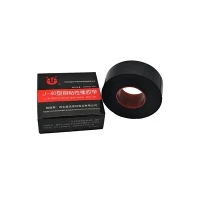
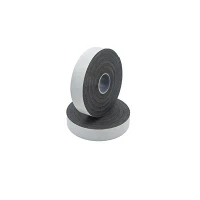
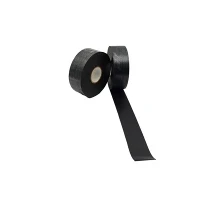
As the pillar industry of the national economy, China's automobile industry is rapidly developing, gradually developing towards large-scale, high-speed, and specialization, and tires are also changing to radial, flat, and tubeless with the international trend. At the same time, the speed of development of the expressway has accelerated, which has also promoted the speed of butylation of tires. Butyl rubber products are used in the inner tube of various tires, the inner liner of tubeless tires, and various sealing gaskets. They are used as linings, pipes, and conveyor belts for corrosive liquid containers in the chemical industry. They are used for waterproofing in agriculture. Materials etc. The advantages of butyl rubber products are very obvious.
Butyl rubber
Butyl rubber is an elastomer made by copolymerization of a small amount of isoprene (butadiene) and isobutylene, with high saturation. Generally, mastication is not required. Be careful not to blend with unsaturated rubber. Low unsaturation. Use super accelerator and less sulfur or resin vulcanization. Due to the slow vulcanization speed of ordinary butyl rubber, poor compatibility with highly unsaturated rubber, poor self-adhesion and co-viscosity, it was later halogenated and modified to improve its vulcanization speed and other highly unsaturated rubber The main performance characteristics of the compatibility, good air tightness, is the best among ordinary rubber. Low resilience, good performance in absorbing vibration and impact energy, good water resistance, low water penetration. Excellent heat aging resistance, good ozone resistance, weather resistance and chemical stability.
Butyl rubber products have good corrosion resistance to most inorganic and organic acids. Although it is not resistant to concentrated oxidizing acids, such as nitric acid and sulfuric acid, it is resistant to non-oxidizing acids and moderate concentrations of oxidizing acids, and resistant to alkaline solutions and oxidation Reduction solution. After immersed in 70% sulfuric acid for 13 weeks, the strength and elongation of butyl rubber hardly lost, while the properties of natural rubber and styrene butadiene rubber have seriously deteriorated.